My feed has been taken over
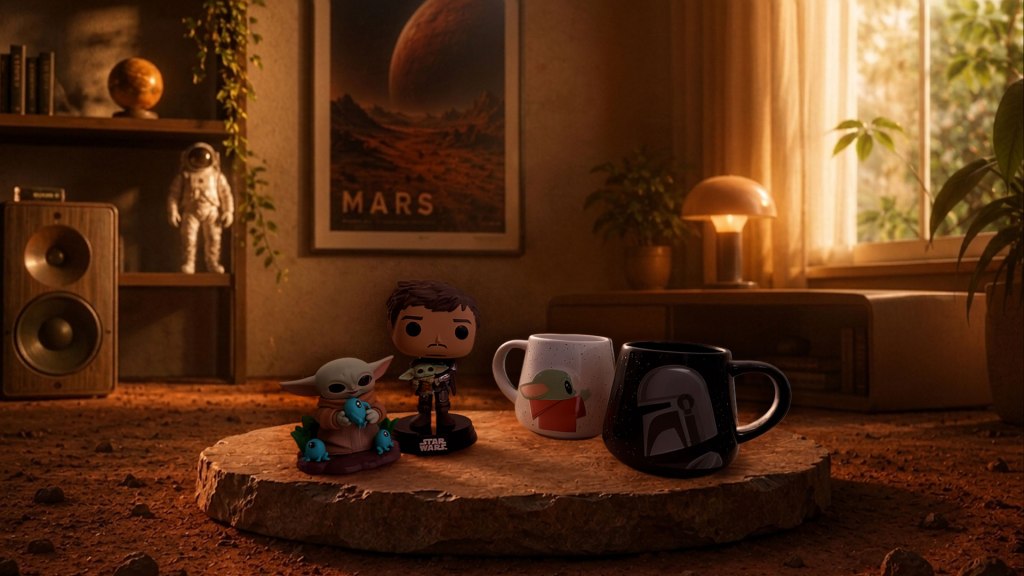
With the upcoming premiere of The Mandalorian & Grogu — the feature-length expansion of the beloved TV series — my FYP got flooded. Trailers, brand collabs, merch hauls, people unboxing things I didn’t know I needed. And as a fan myself, I’m not going to pretend I was immune. I did go and buy some Mando and Baby Yoda merch. How could I possibly resist?
That question stuck with me. How couldn’t I resist — and why? So I decided to take a closer look at what is actually happening here.
Why now and not six months ago
This is actually a great question. Why now? Why a few weeks before the actual premiere, and not six months ago when the hype could have been building longer?
There is a reason for this, and it goes by the name of just-in-time marketing.
With the shift of society into the digital age, everything moves fast. There is an enormous amount of content, and ads are lurking behind every internet corner. Users are bombarded, which leads to content fatigue and shorter attention spans. With the rise of social media and AI, content is being created faster than ever, and culture moves with the algorithms — platforms reward content that responds to real-time behaviour: what people are watching, searching, saving, and sharing. The algorithms respond to momentum.
There is a need for immediate relevance, and an urgency to follow rapid cultural trends. Campaigns that launch too early are often forgotten by the time the moment actually arrives. This is why companies increasingly release their campaigns closer to the rollout — to remain relevant, to stay in people’s minds, and to break through the digital noise at the exact moment people are ready to engage (Kellog Insight, 2022; Luxe marketing strategies, 2026).
What Disney actually did
Disney once again proved they know what they are doing when it comes to marketing.
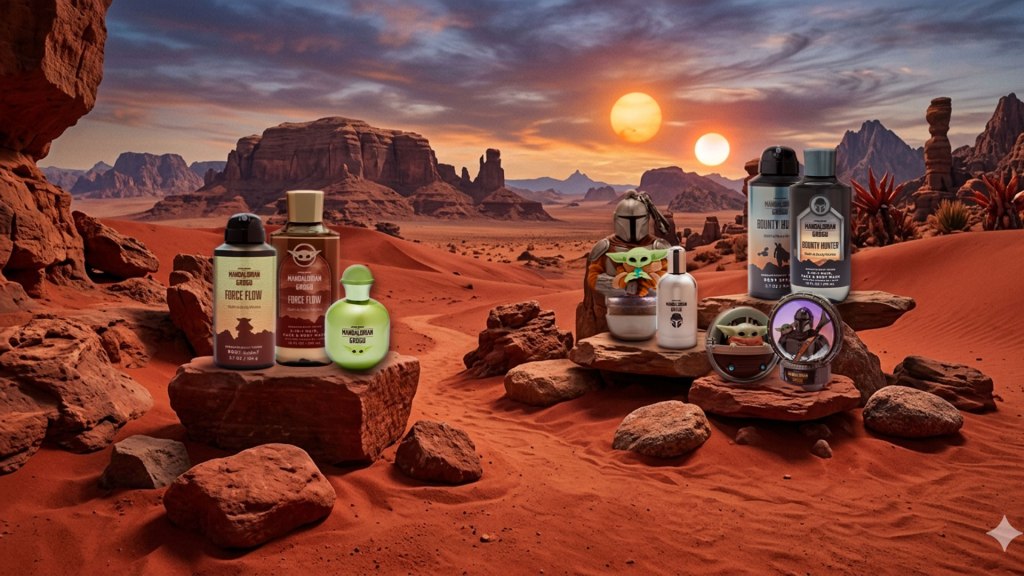
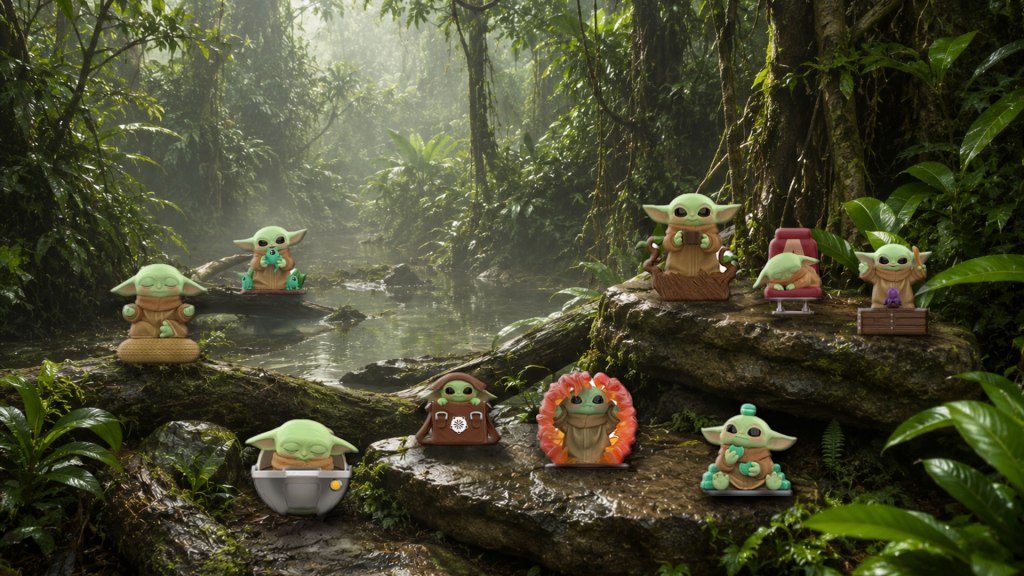
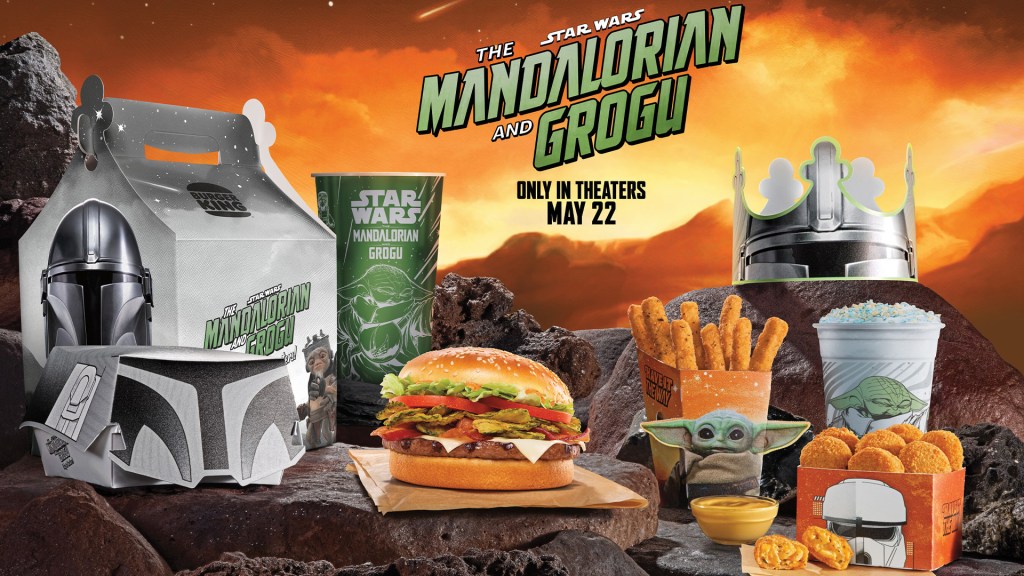
Across multiple brand partnerships — LEGO, Swarovski, Burger King, Bath & Body Works, Pop Mart, Funko Pop, and others — Disney coordinated a simultaneous, multi-channel rollout timed precisely to the film’s release window. Different categories, different audiences, different price points — but all showing up at the same time and pointing in the same direction.
This is what a coordinated activation model looks like in practice: multiple channels, multiple partners, one unified cultural moment. It is a strategic approach that synchronises marketing efforts across platforms and partnerships to create interactive experiences — events, social campaigns, digital activations — that build emotional connection and strengthen loyalty. It helps accelerate the buyer journey from awareness to purchase by creating not just visibility, but presence across everyday life.
Disney allowed consumers to participate — to share their purchases, show off their merch, post their unboxings — further expanding the reach organically. And at the centre of all of it is a cultural moment: the return of a franchise audiences genuinely love, translated into objects people can hold, wear, and display.
The film itself serves as a temporal landmark — more on that in a moment — and the coordinated brand effort around it is what turns that landmark into a marketing event.
The numbers behind it
Disney purchased Lucasfilm from George Lucas in 2012 for $4.05 billion. Since then, the Star Wars franchise has generated approximately $12 billion in revenue for the company — making it one of the most valuable media acquisitions in history.
Licensed Star Wars toys alone bring in around $3 billion a year in revenues. Grogu — first known to fans as Baby Yoda, a nickname that spread before Disney even revealed the character’s official name — has been described as a steady seller ever since his introduction in The Mandalorian Season 1. Disney famously miscalculated his initial popularity and lost an estimated $2.7 million in potential sales during the 2019 Christmas season simply because they hadn’t manufactured enough product in time. They did not make that mistake again (Dolak, 2024).
Disney does not specify exact numbers for Mandalorian merchandise separately, but the pattern is clear: this franchise sells. And where there is a proven, emotionally resonant franchise with a built-in audience, brands want to be part of the moment.
Why it actually works: temporal landmarks
The turning points that end one chapter and begin another are called by behavioural scientists temporal landmarks — psychologically meaningful moments that separate our old selves from our new selves. They can be universal or personal: a new year, a birthday, a graduation, a promotion. Or, in our case, the premiere of a well-known and deeply loved franchise.
Research by Dai, Milkman and Riis (2014) shows that people are significantly more motivated to pursue goals and engage in new behaviours immediately after temporal landmarks, compared to ordinary days. This is called the fresh start effect: when a landmark occurs, it creates a psychological separation between past and present self, effectively offering a clean slate. It increases openness, optimism, and willingness to act.
But there is another side to this that is particularly relevant here. Research on end temporal landmarks — moments that signal the closing of a chapter rather than the opening of one — shows a different but equally powerful mechanism. End landmarks trigger feelings of nostalgia, which in turn activate the need to belong. And that need to belong, according to Song, Tian, Fan and Zhang (2024), is what drives nostalgic consumption: people seek out objects, experiences, and communities that reconnect them to something they associate with warmth, safety, and connection.
A Star Wars film premiere operates on both levels. It is a beginning — a new chapter of the story, a new theatrical era — but for fans who grew up with the franchise, or who followed The Mandalorian from the beginning, it also marks the end of the TV series era. Both mechanisms activate simultaneously.
This is why the marketing works. It is not just that it is well-timed. It is that it arrives at exactly the moment when audiences are psychologically open to engaging, spending, and belonging to something.
Using temporal landmarks in marketing creates a genuine sense of urgency — not manufactured pressure, but the real psychological pull of a moment that exists now and will soon be over. Limited merchandise and exclusive activations amplify this further by making the window feel even more finite.
A case that worked: Peloton launched its „Something Is Everything“ campaign on January 1st, 2024 — not because January 1st is arbitrary, but because it is one of the strongest temporal landmarks in the calendar year. Rather than trying to manufacture motivation, Peloton intercepted motivation that was already there. That distinction matters: the campaign succeeded because the landmark did the psychological work, and Peloton simply showed up at the right time with the right message (Beirne, 2025).
When this goes wrong
emporal landmarks only work when the brand belongs in the moment emotionally. Not every landmark is relevant to every audience, and not every brand has the right to show up.
Forcing urgency without relevance can come across as manipulative, tone-deaf, or opportunistic. When campaigns rely on pressure or guilt rather than empowerment — „new year, no excuses“ being a well-worn example — the fresh start effect collapses. Instead of meeting people in a moment of openness, the brand closes it down. The window shuts.
The same applies here: a brand that has no emotional connection to the Star Wars universe, no relevant product category, no authentic reason to be in this space — showing up with Mando merch anyway does not make them part of the moment. It makes them noise (Beirne, 2025).
Three things to steal
None of this requires a Disney budget. The underlying mechanism works at any scale — what matters is understanding why it works, not how much was spent.
- Step 1 — Know your emotional territory, and stay in it
The temporal landmark only works if your brand genuinely belongs in the moment. Bath & Body Works and comfort, nostalgia, and sensory warmth — that is a natural fit. The Grogu candle makes sense because the emotional register of the product and the emotional register of the character are the same. A brand that does not belong in that emotional space cannot buy its way in with a licensed product. Before you ask is this popular, ask does our emotional territory overlap with this moment’s emotional territory. If the answer is no, wait for a moment that is actually yours.
- Step 2 — Hit the window, not the runway
The psychological window created by a temporal landmark is real, and it is short. Research shows that motivation, openness, and willingness to engage spike at the landmark itself — not weeks before it, and not after it has passed. Campaigns that launch too early get forgotten. Campaigns that arrive late are irrelevant. The goal is to coordinate your entry so that you land inside the moment, not around it. This is the actual reason just-in-time marketing works — it is not just about digital logistics, it is about psychology. The window exists because of how humans process time. Show up while it is open.
- Step 3 — Give people something to belong to, not just something to buy
The research is consistent on this: the deepest driver behind nostalgic consumption is not fandom and it is not aesthetics — it is the need to belong. People are not buying a Grogu plush because they need a plush. They are buying it because it connects them to something, signals something about who they are, and places them inside a community of people who feel the same way. Limited drops, exclusive collaborations, community moments — these work because they answer that need directly. If your activation is purely transactional, it misses the point. Build something people can be part of.
Conclusion
Timing and emotion are not soft variables in marketing. They are the mechanism. A campaign that arrives at the right psychological moment — when an audience is open, motivated, and looking for connection — will outperform a bigger campaign that arrives at the wrong one, every time. Disney did not invent this. They just executed it with precision.
And yes — Grogu is also objectively extremely cute, which is doing a non-trivial amount of work here. The animatronic puppet, the big eyes, the tiny hands eating the blue macarons. There is established psychological research on what cuteness does to human behaviour (spoiler: it makes us want to acquire and protect things). That is a separate mechanism, and it is absolutely contributing. But it is layered on top of something that would work even without it.
The temporal landmark creates the window. The emotional fit determines whether a brand belongs inside it. And if you get both right — you will not need a $4 billion franchise to make it work.
Refferences
Dai, H., Milkman, K.L. and Riis, J. (2014) ‚The fresh start effect: Temporal landmarks motivate aspirational behavior‘, Management Science, 60(10), pp. 2563–2582.
Dai, H. and Li, C. (2019) ‚How experiencing and anticipating temporal landmarks influence motivation‘, Current Opinion in Psychology, 26, pp. 44–48.
Song, S., Tian, M., Fan, Q. and Zhang, Y. (2024) ‚Temporal landmarks and nostalgic consumption: The role of the need to belong‘, Behavioral Sciences, 14(2), p. 123.
Beirne, K. (2025) Temporal Landmarks: Marketing for Human Behavior. LinkedIn. Available at: https://www.linkedin.com/pulse/temporal-landmarks-marketing-human-behavior-katie-beirne-ofnbe/
Kellogg Insight (2024) How Has Marketing Changed Over the Past Half Century. Available at: https://insight.kellogg.northwestern.edu/article/how-has-marketing-changed-over-the-past-half-century
LinkedIn (2025) Why Your Campaign Feels Outdated Before It Launches. Available at: https://www.linkedin.com/pulse/why-your-campaign-feels-outdated-before-launches-nesee
The Hollywood Reporter (2024) Disney Star Wars Marvel Profits. Available at: https://www.hollywoodreporter.com/business/business-news/disney-star-wars-marvel-profits-nelson-peltz-1235852695/
SEC Filing — Disney (2024). Available at: https://www.sec.gov/Archives/edgar/data/1744489/000095015724000366/defa14a.htm
Brand Activations Referenced
Swarovski (2025) Mandalorian Collection. Available at: https://www.swarovski.com/en-CZ/search/?text=mandalorian
Funko (2025) The Mandalorian. Available at: https://funko.com/fandoms/scifi/the-mandalorian/
Pop Mart (2025) The Mandalorian & Grogu Collection. Available at: https://www.popmart.com/us/pop-now/set/467
LEGO (2025) Star Wars — The Mandalorian. Available at: https://www.lego.com/en-cz/themes/star-wars/mandalorian
Burger King (2025) Burger King Launches Out of This Galaxy Limited-Time Menu Inspired by Star Wars: The Mandalorian and Grogu. Available at: https://news.bk.com/blog-posts/burger-king-r-launches-out-of-this-galaxy-limited-time-menu-inspired-by-the-highly-anticipated-upcoming-movie—star-wars-the-mandalorian-and-grogu
Bath & Body Works (2025) Star Wars Collection. Available at: https://www.bathandbodyworks.com/t/collaborations/star-wars


Zanechat odpověď